How lessons work
This page shows a real lesson deck and the work that comes with it: what your child sees in class, what they do between classes, and how we check it.
One topic, from start to finish
The same routine for every subject. Each part leaves something your child keeps.
Before the class
We read the board’s specification for the topic and build the deck around it, with your child’s exam date in mind.
In the class
60 minutes live on Google Meet: the idea, worked examples, then questions your child answers while we watch the working.
After the class
Homework on the same topic, written to match the real paper. We check it before the next class.
End of the topic
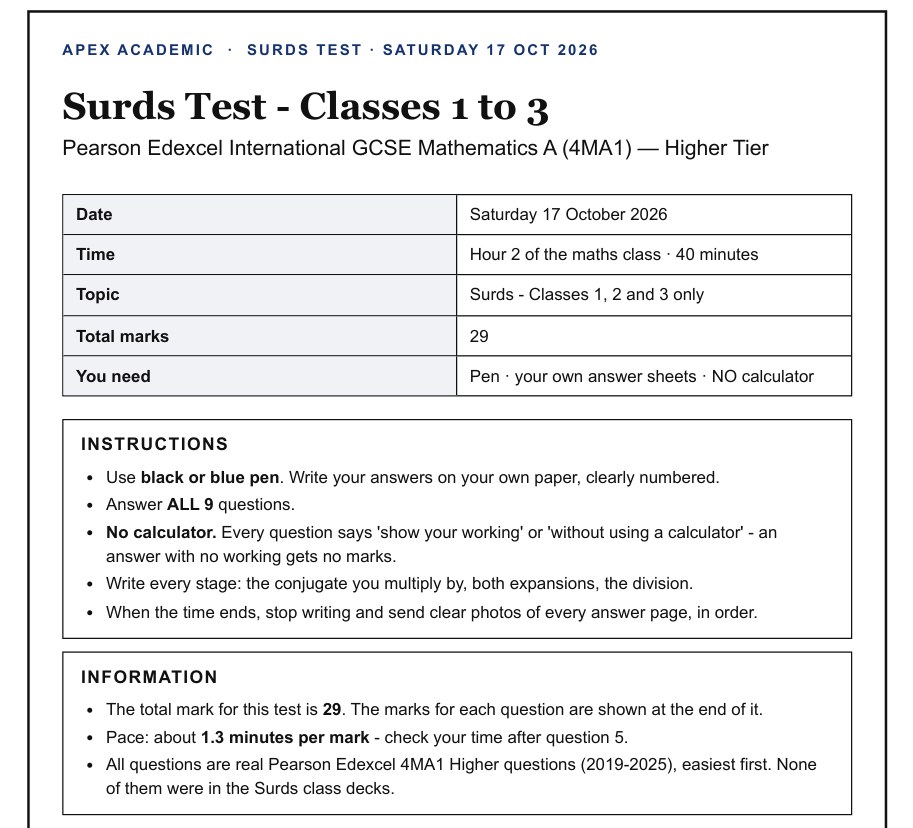
A short timed test in exam conditions, sent as a paper with a time limit.
Within two days
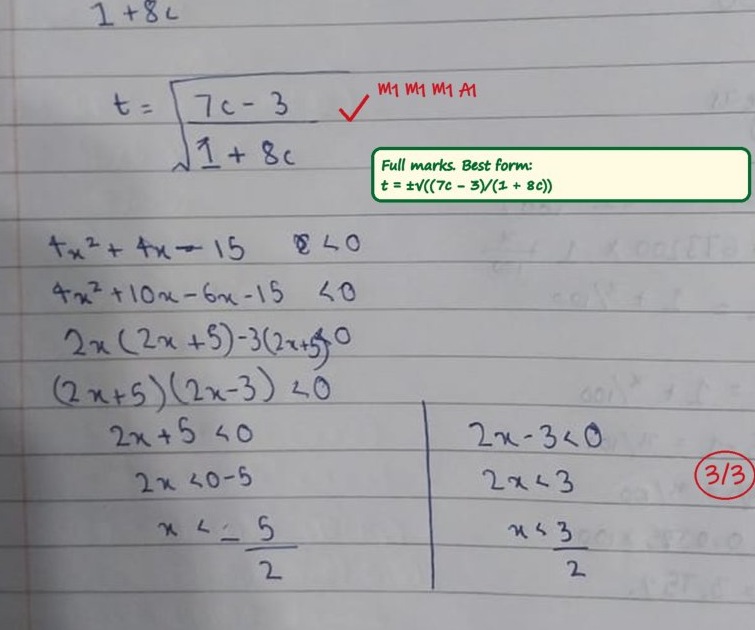
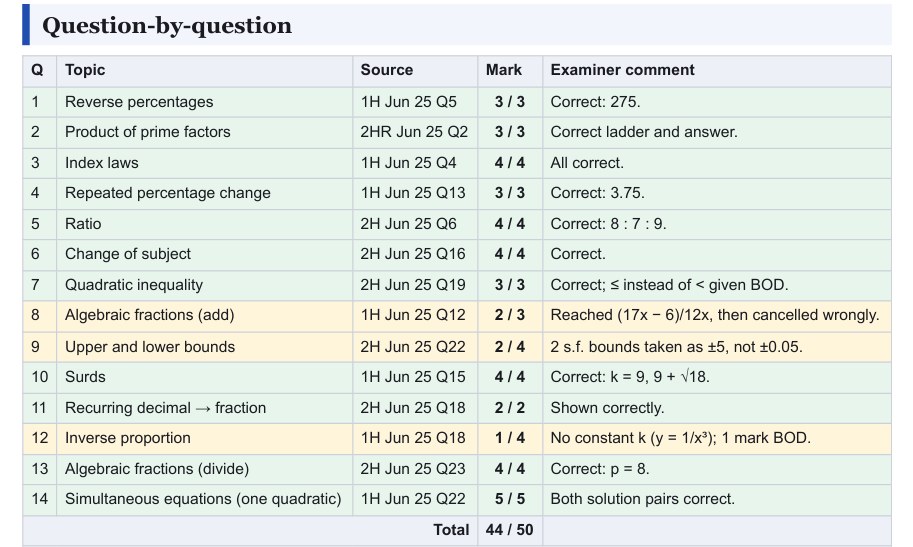
The test comes back marked with method and accuracy marks, plus a table of what to fix.
Next class
We start with the mistakes from the test, so they are fixed before the next topic begins.
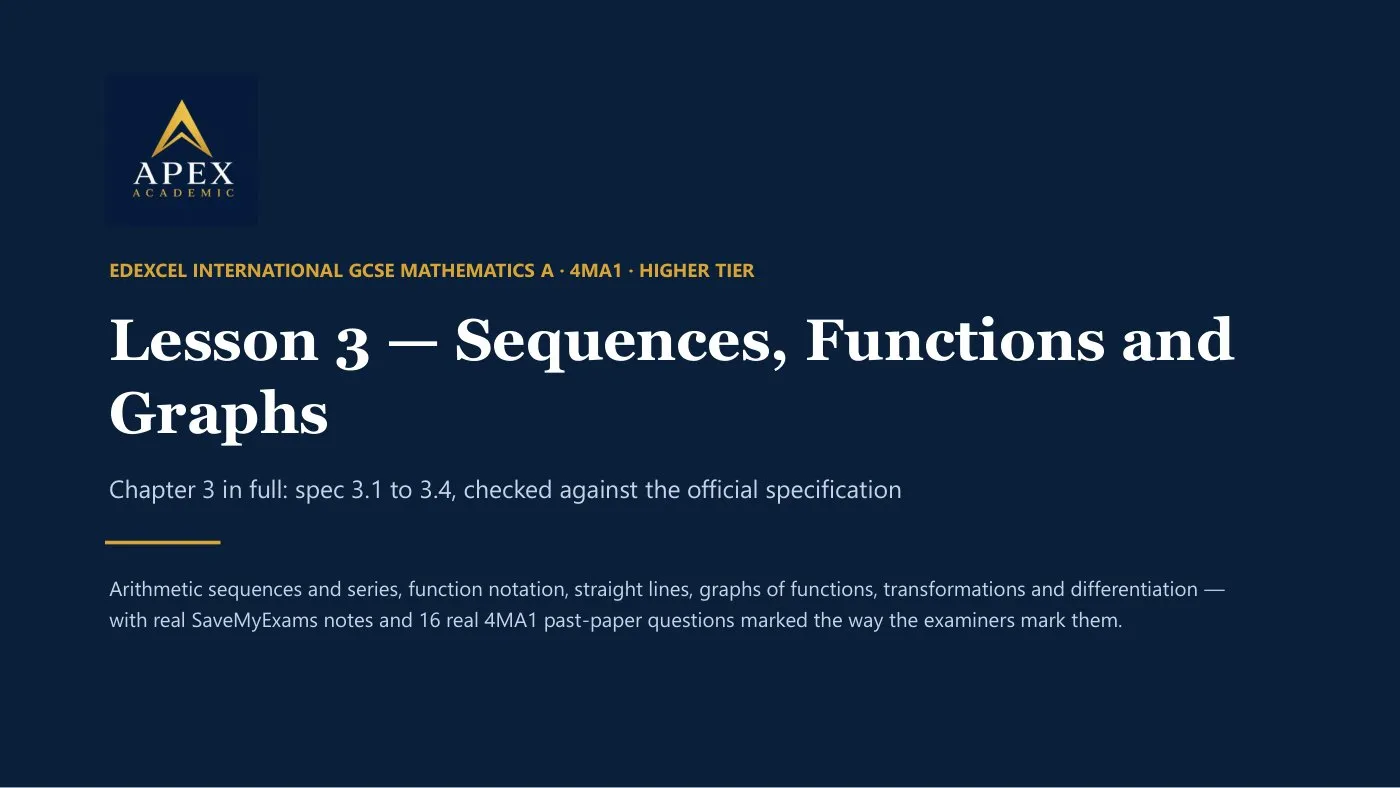
Inside one real deck
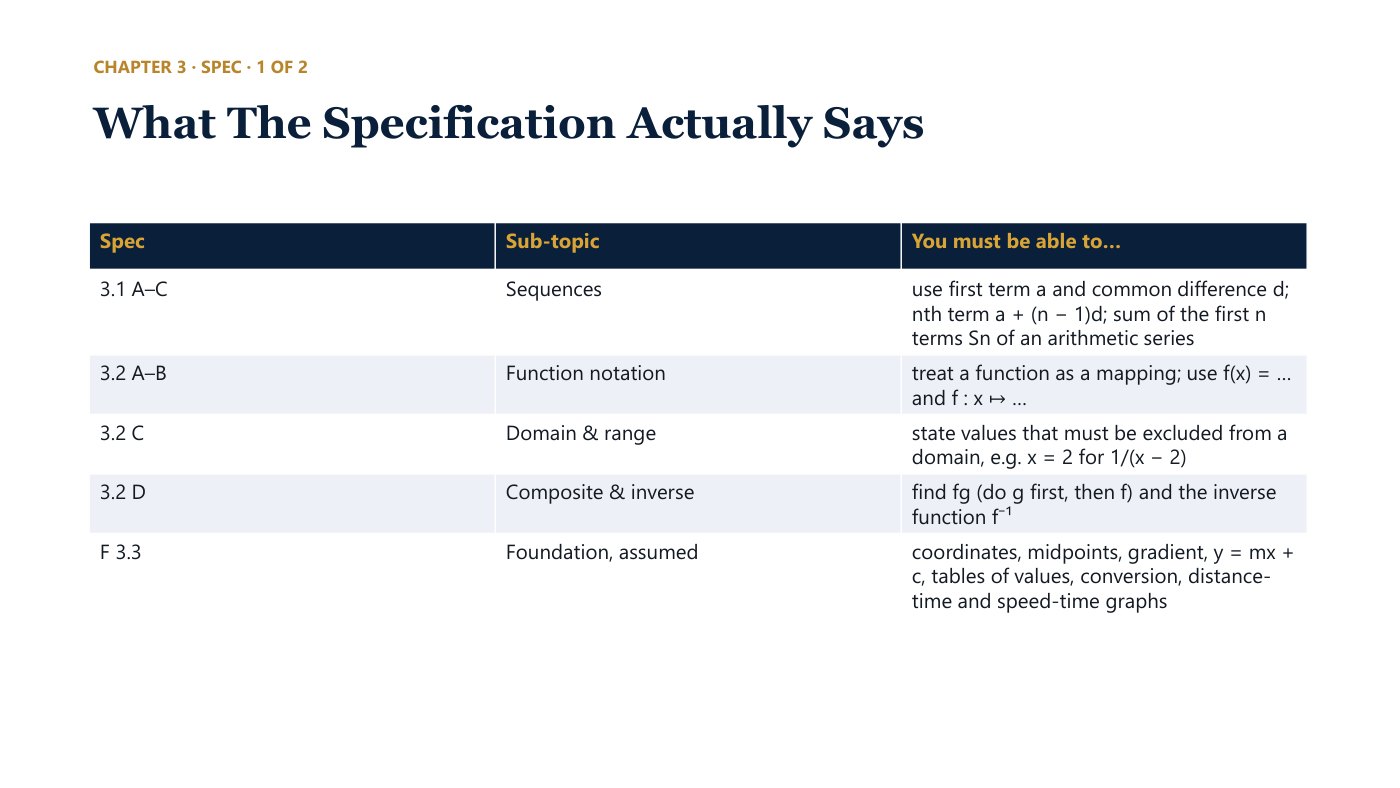
Edexcel International GCSE Mathematics (4MA1), Lesson 3: Sequences, Functions and Graphs. 107 slides, built for one student’s Higher paper. Each chapter of the deck follows the same pattern.
-
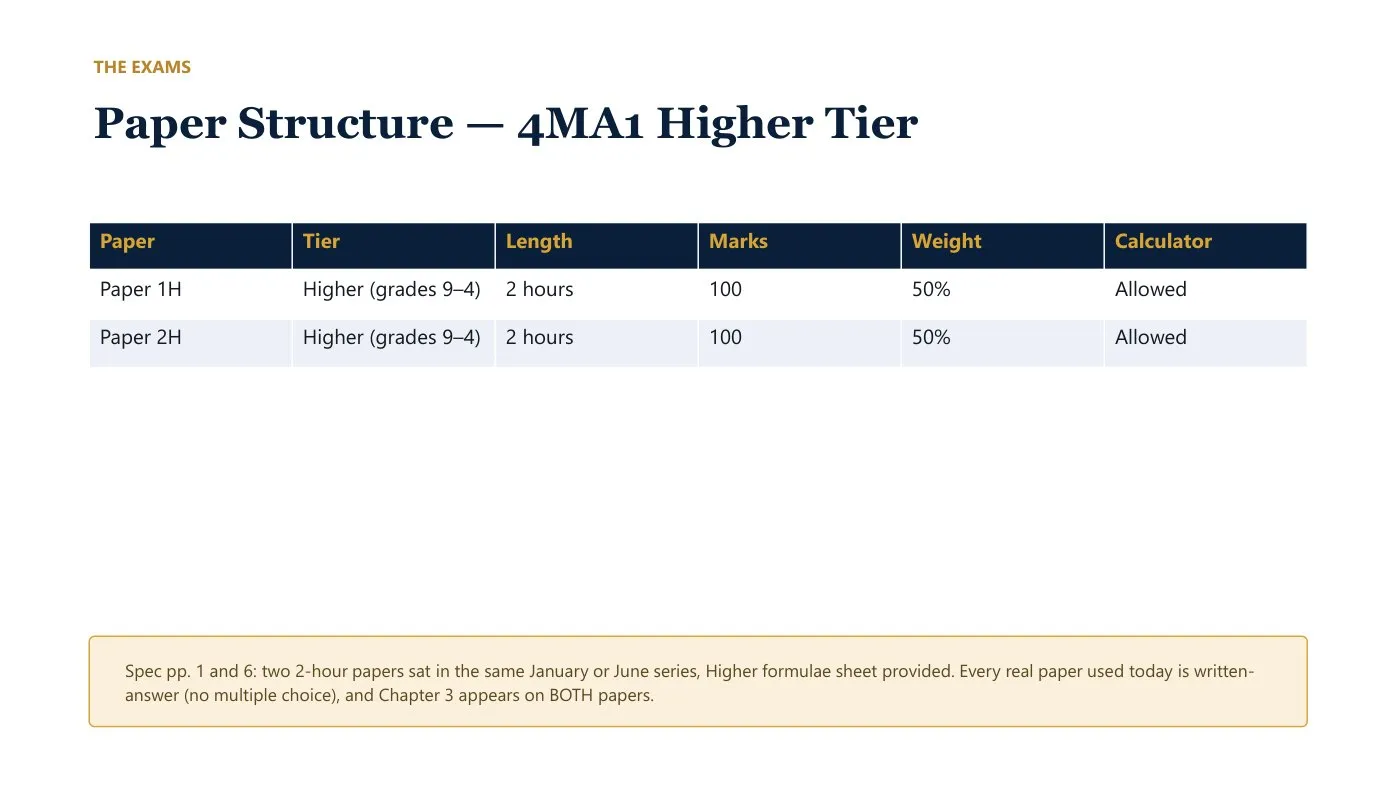
The exam first
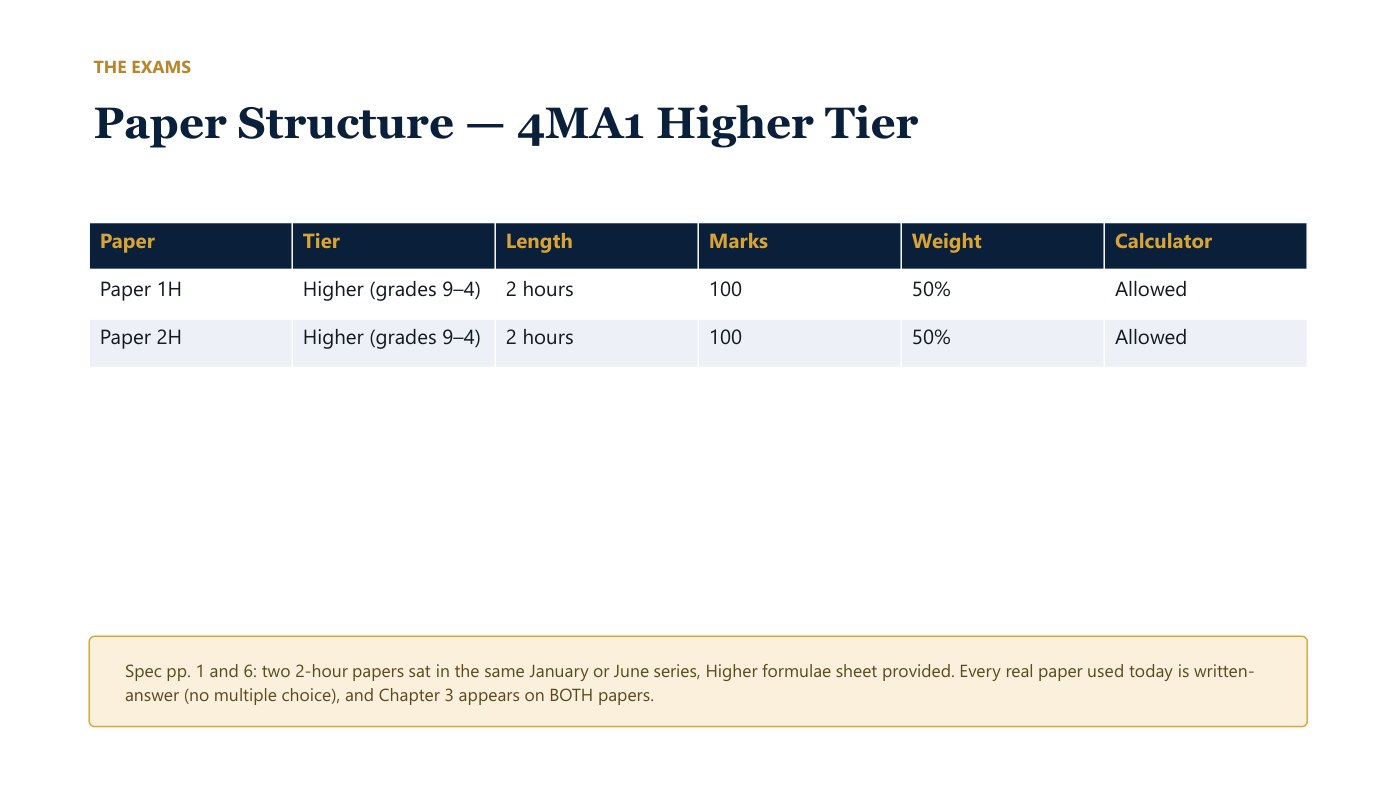
Which papers, how long, how many marks, and what this lesson covers in the specification.
-
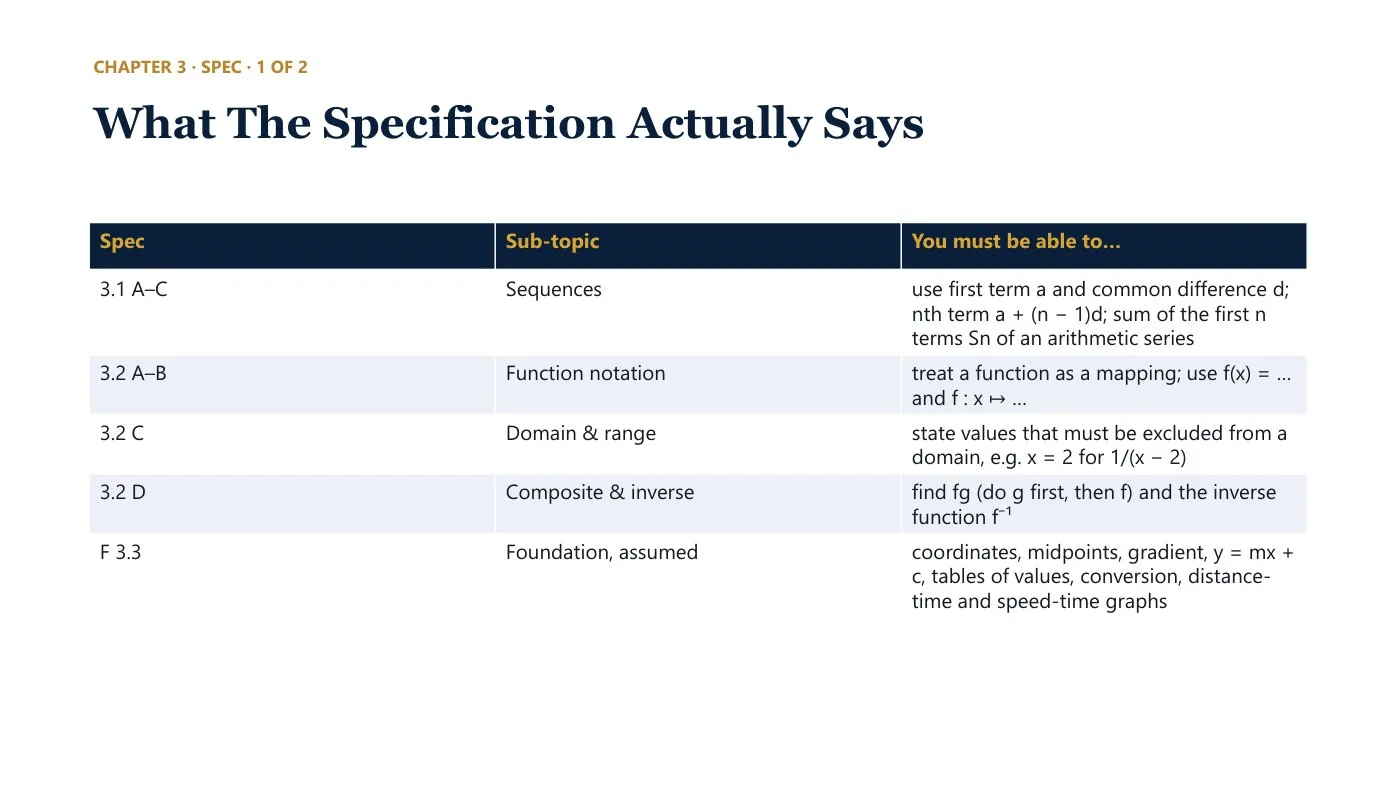
The specification, line by line
Every slide that follows is tied to a statement in the board’s own document.
-
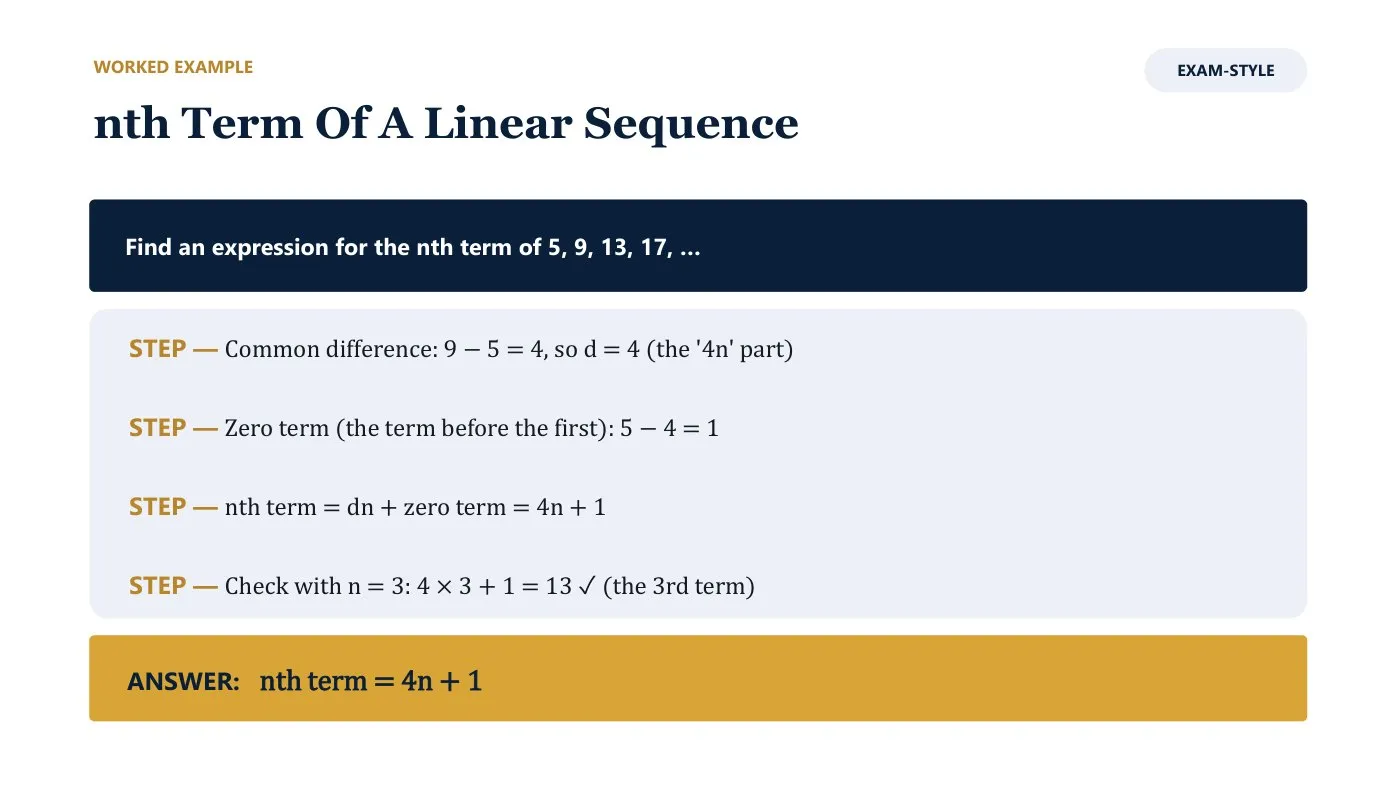
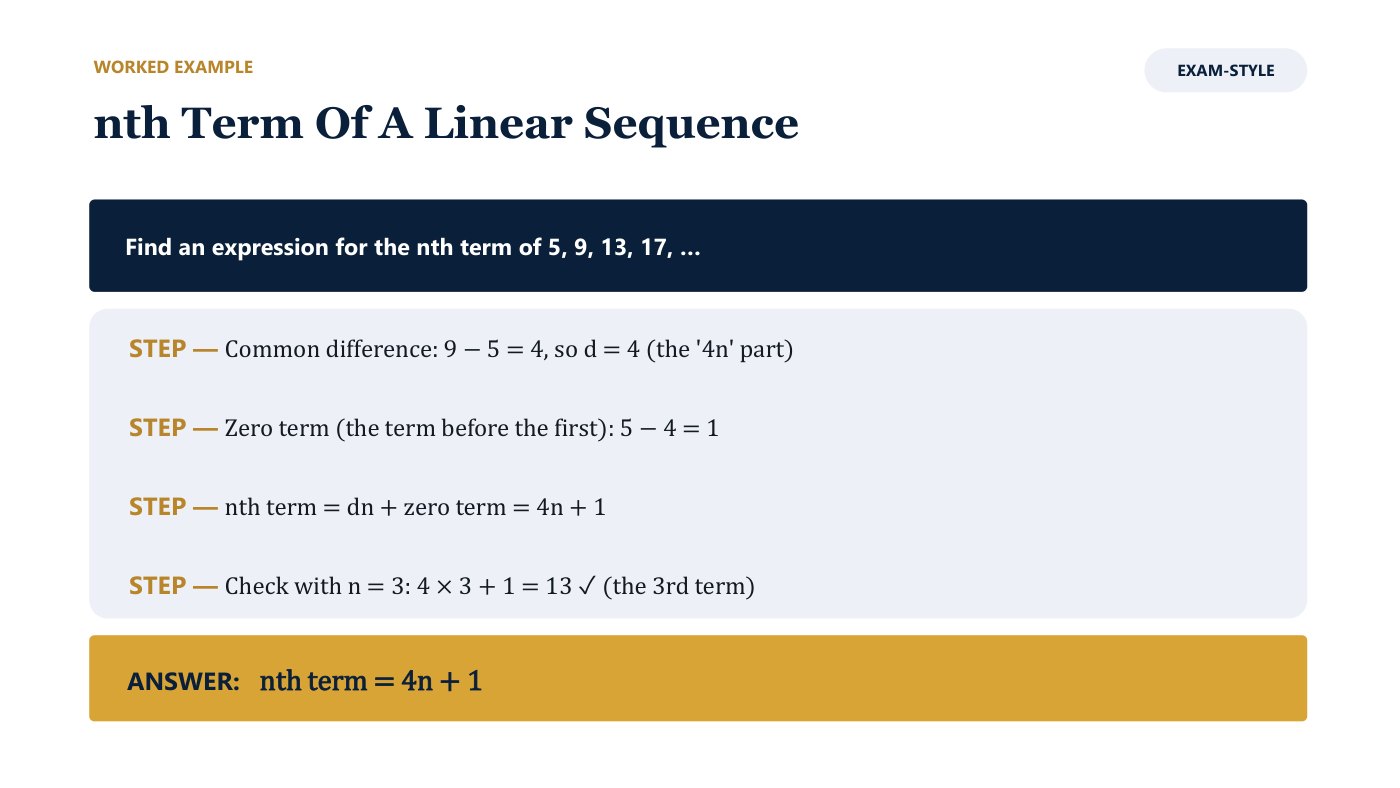
Worked examples
One step per line, the way it should be written in the exam, ending in a clear answer.
-
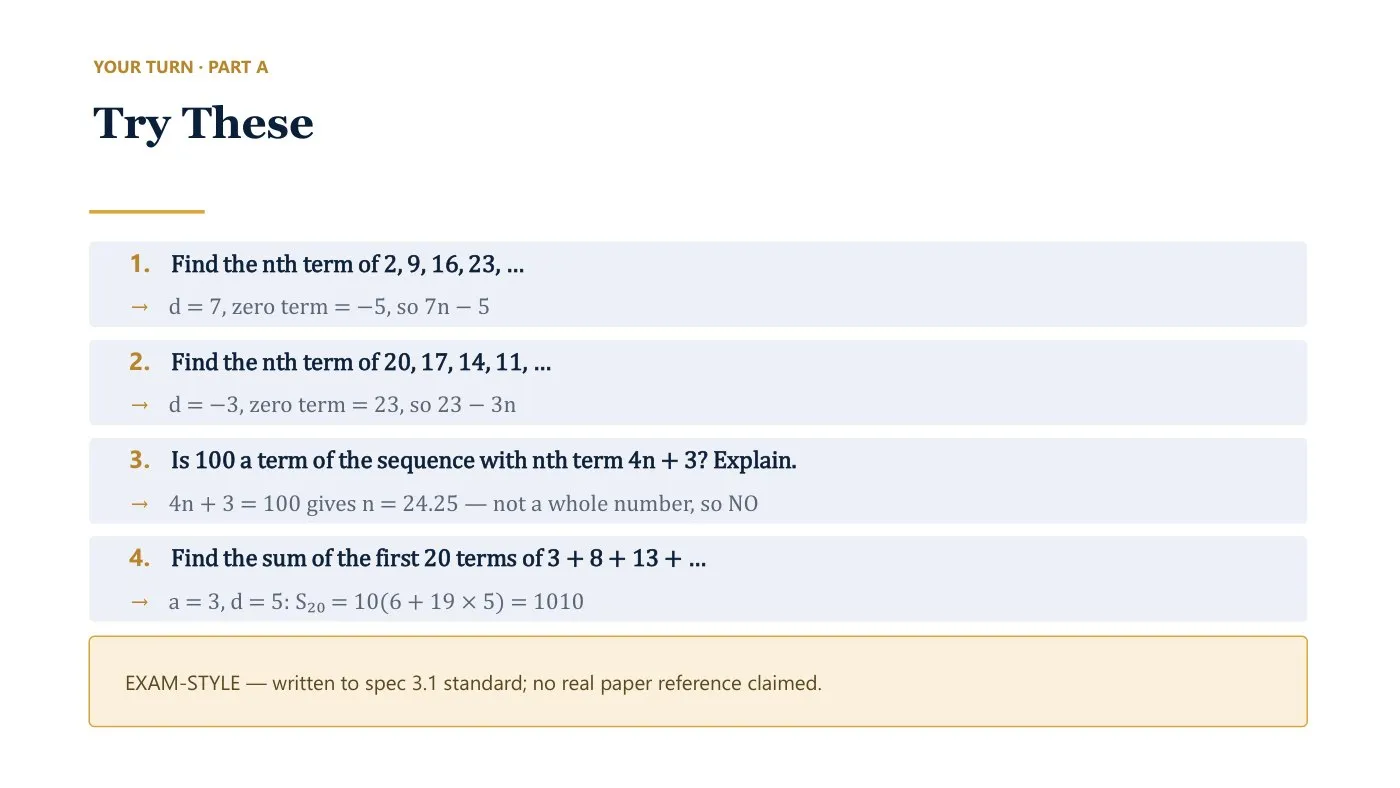
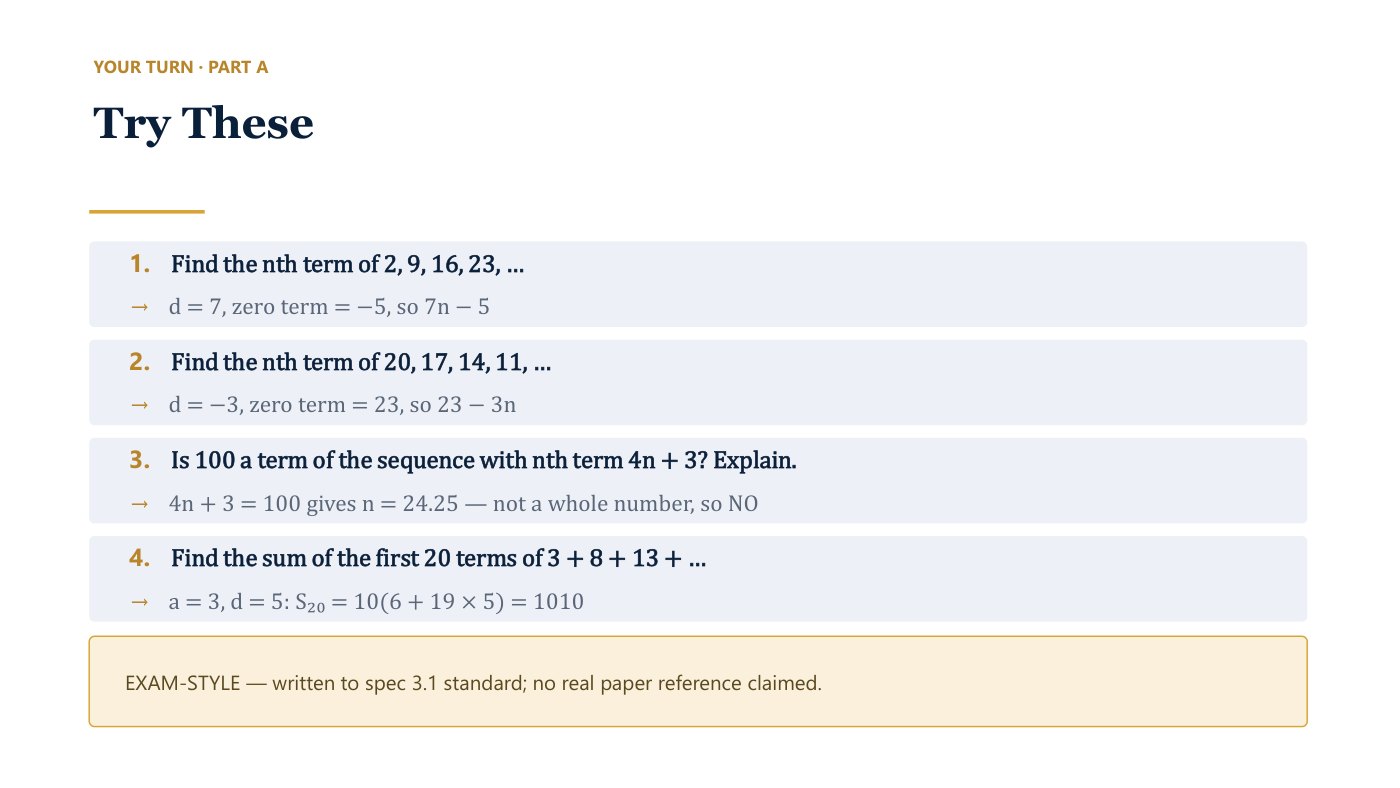
Your turn
Questions your child tries live; the answers appear one at a time after each attempt.
-
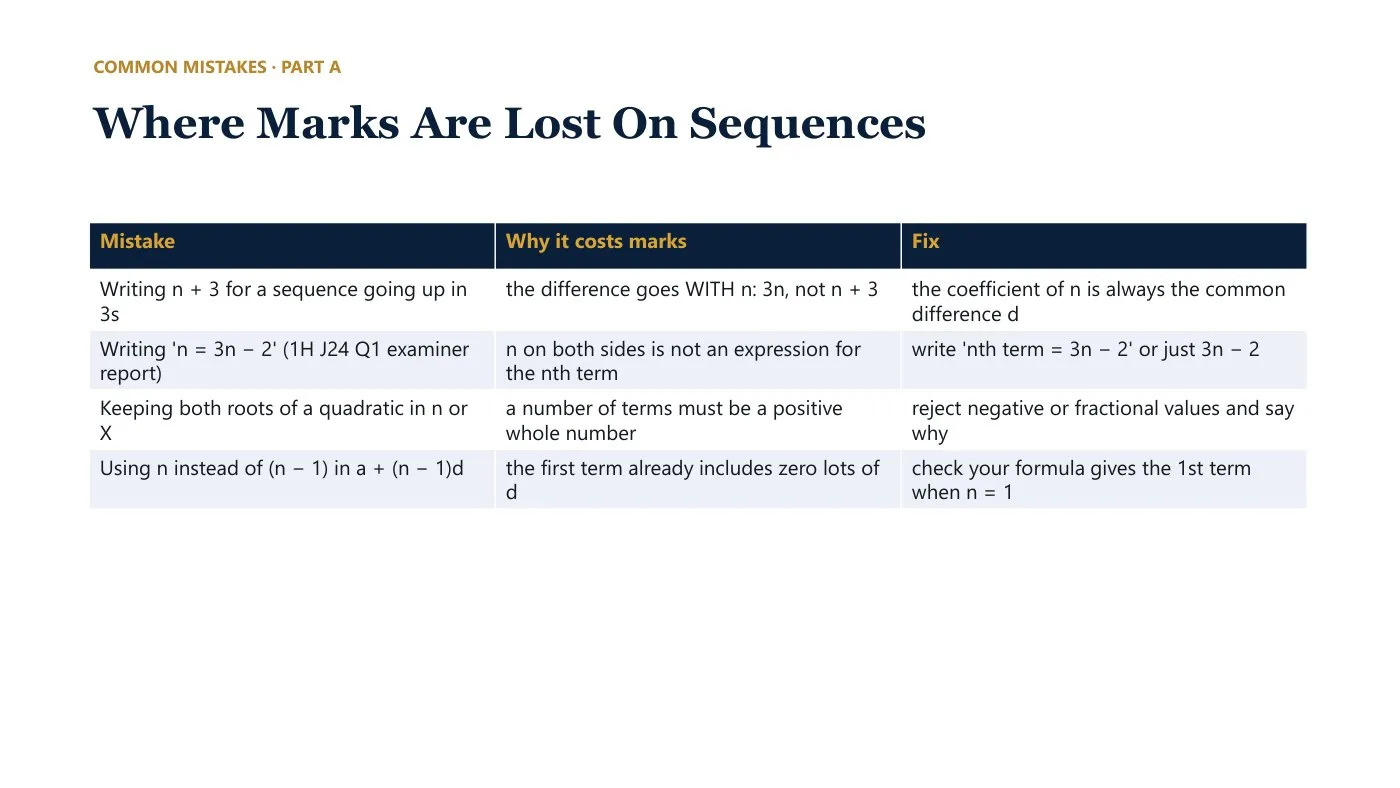
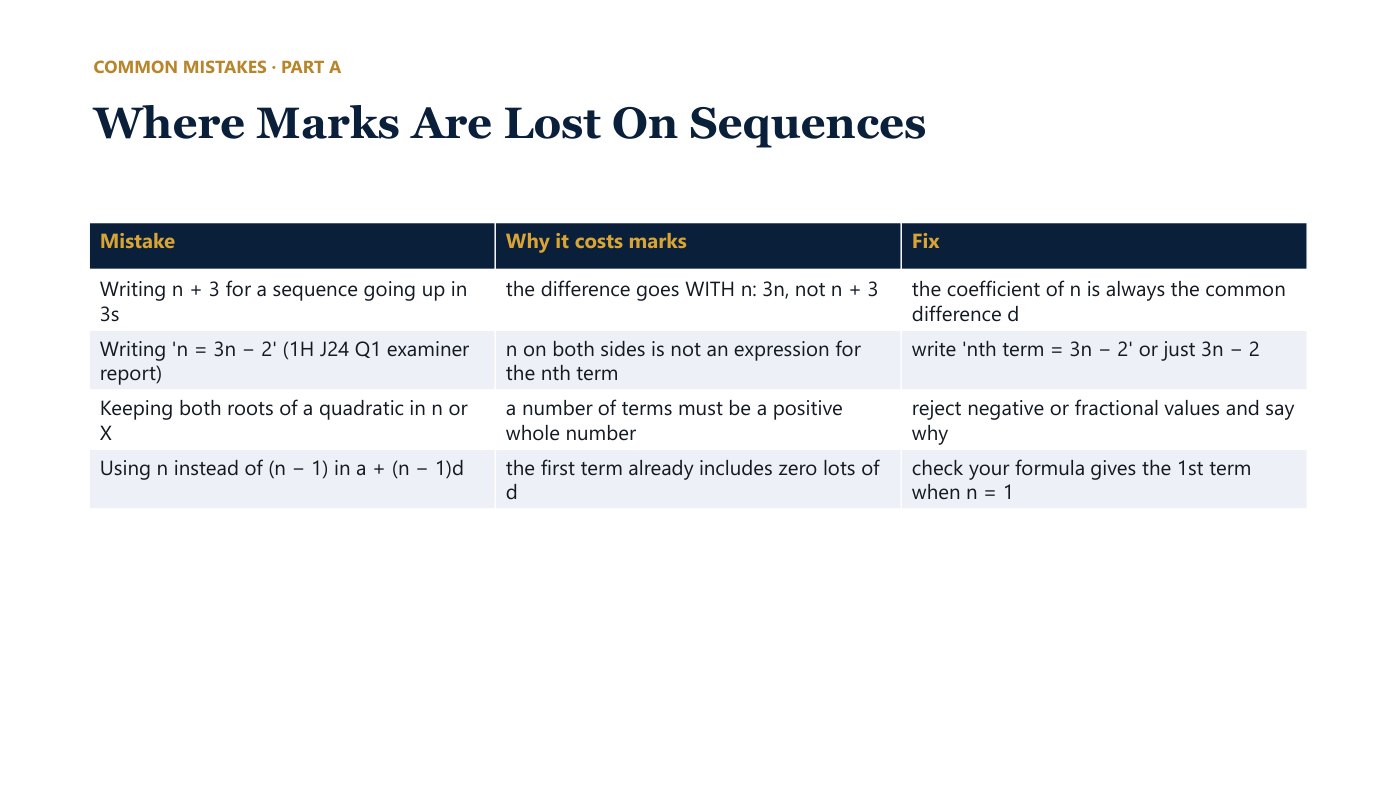
Where marks are lost
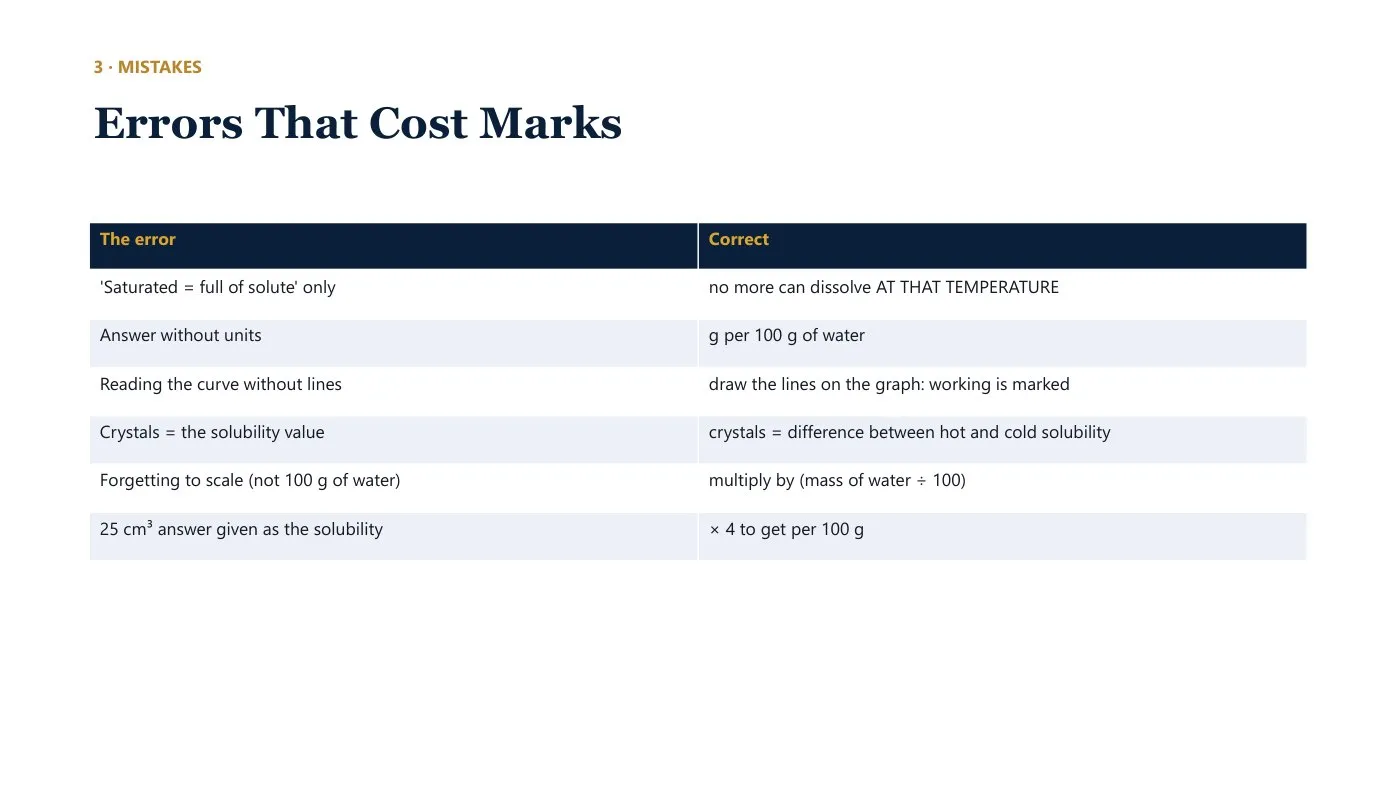
The mistakes examiners report every year, why they cost marks, and how to avoid them.
-
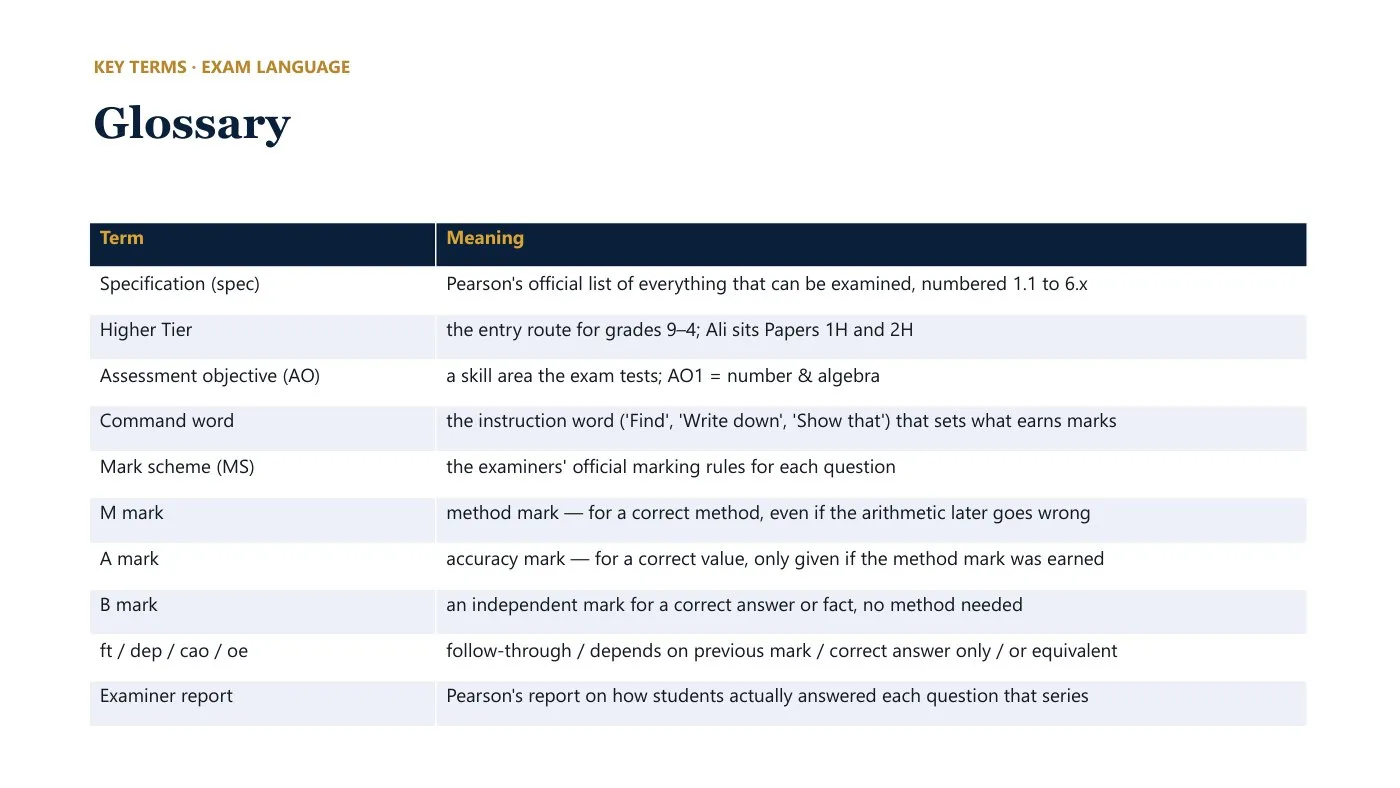
Key terms
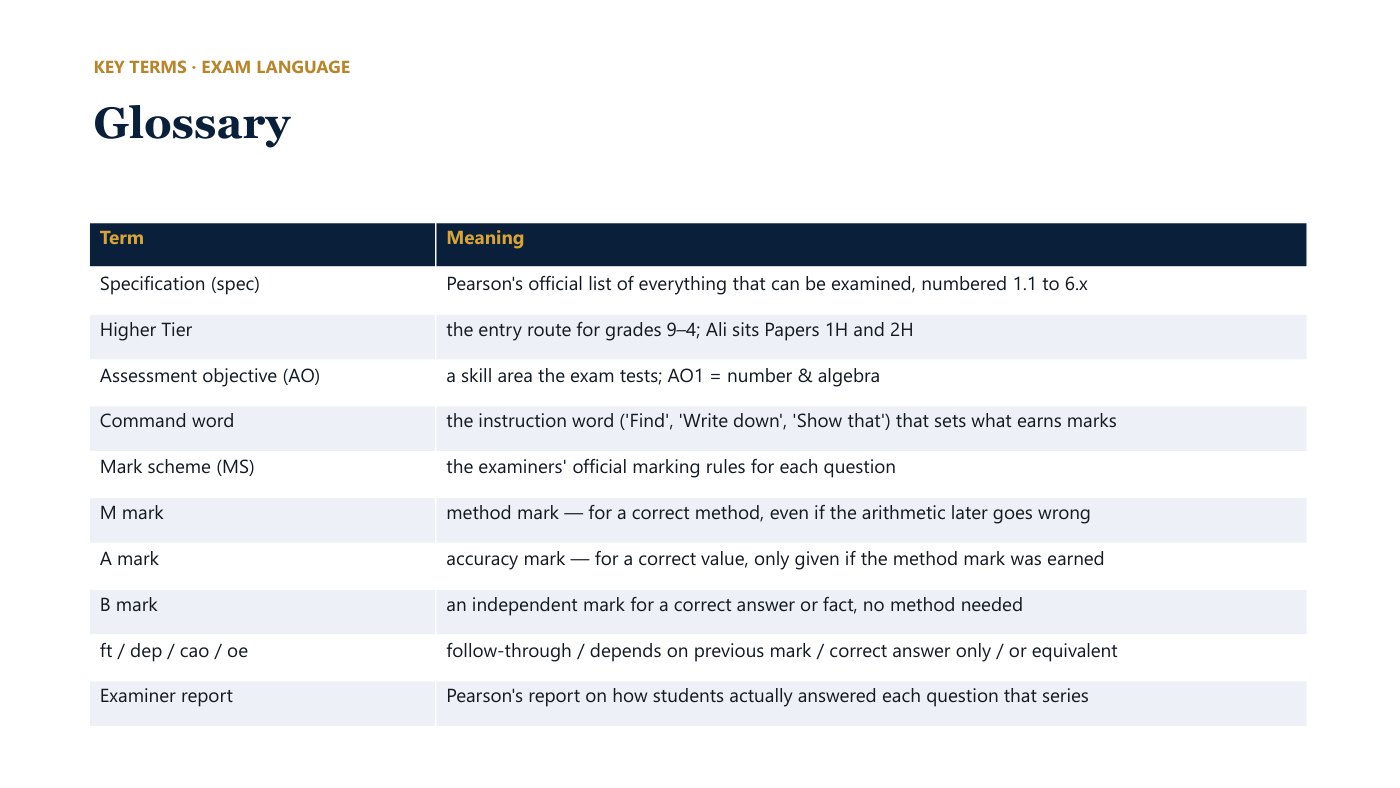
A glossary in every part, so the exam’s words are never a surprise.
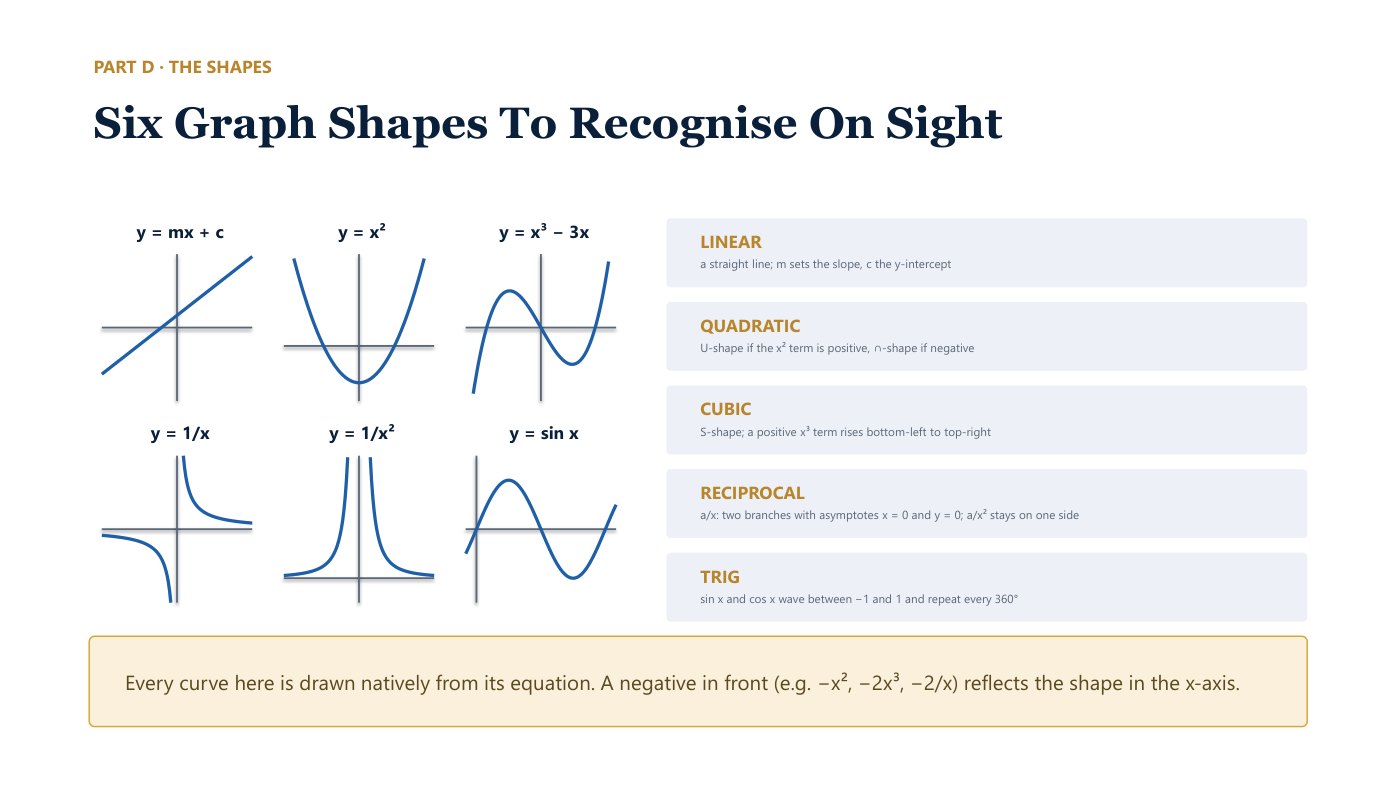
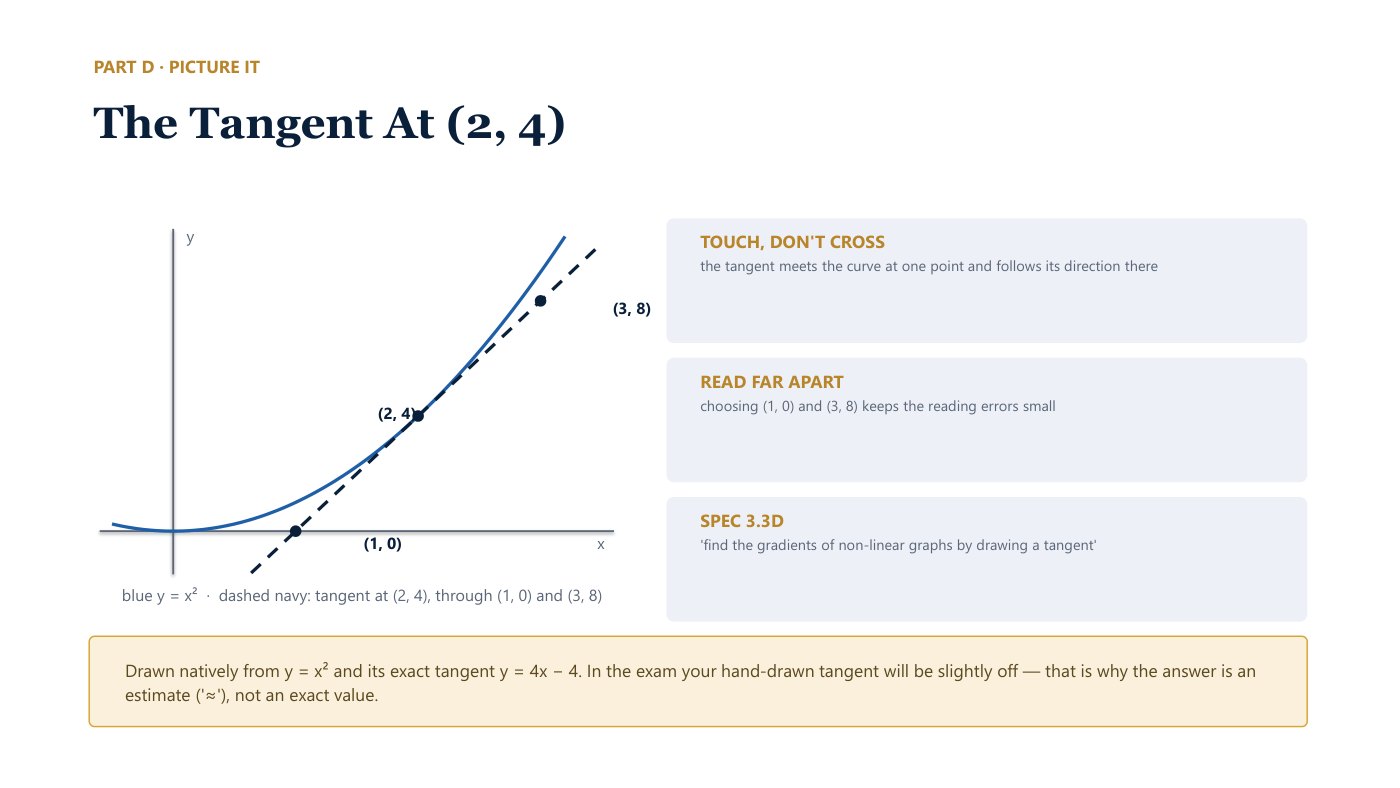
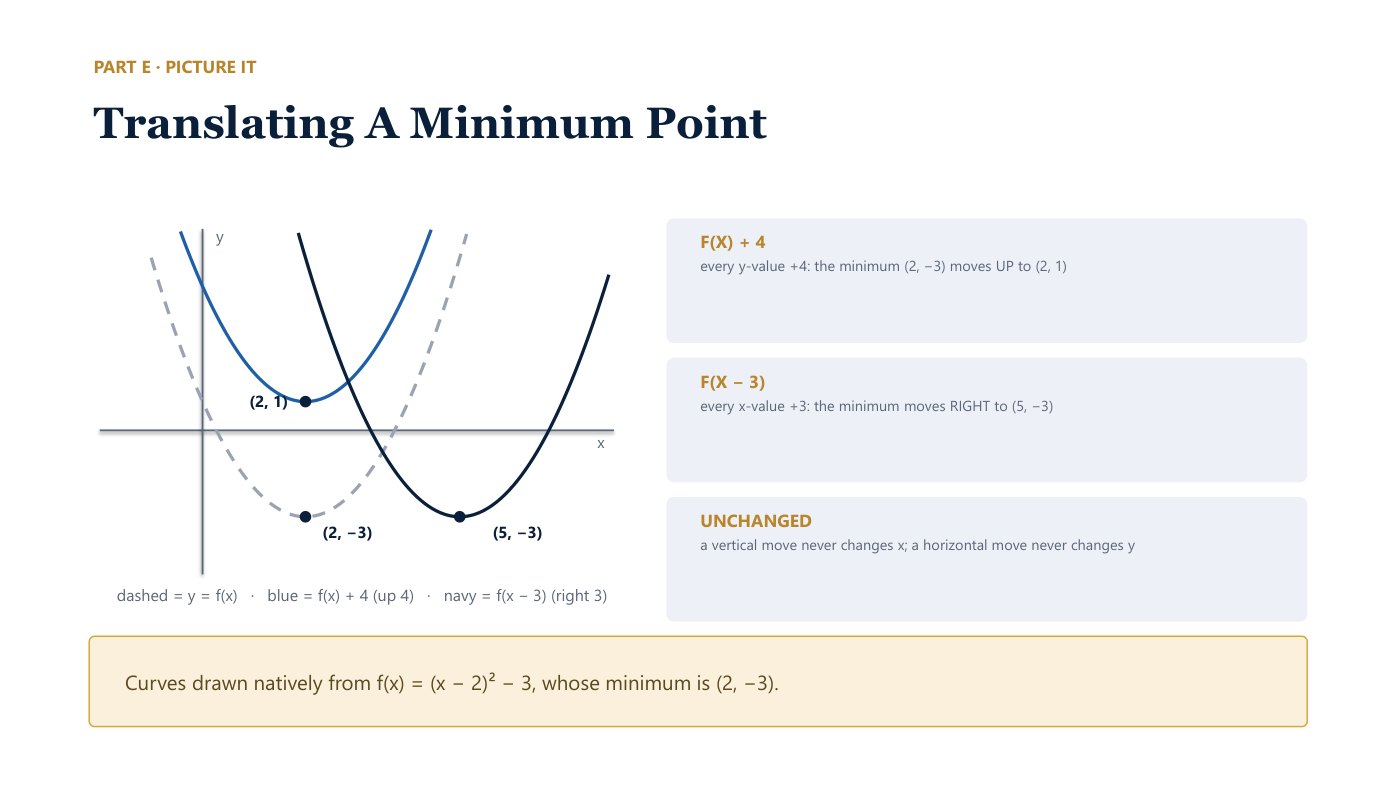
Graphs and figures drawn for the exam
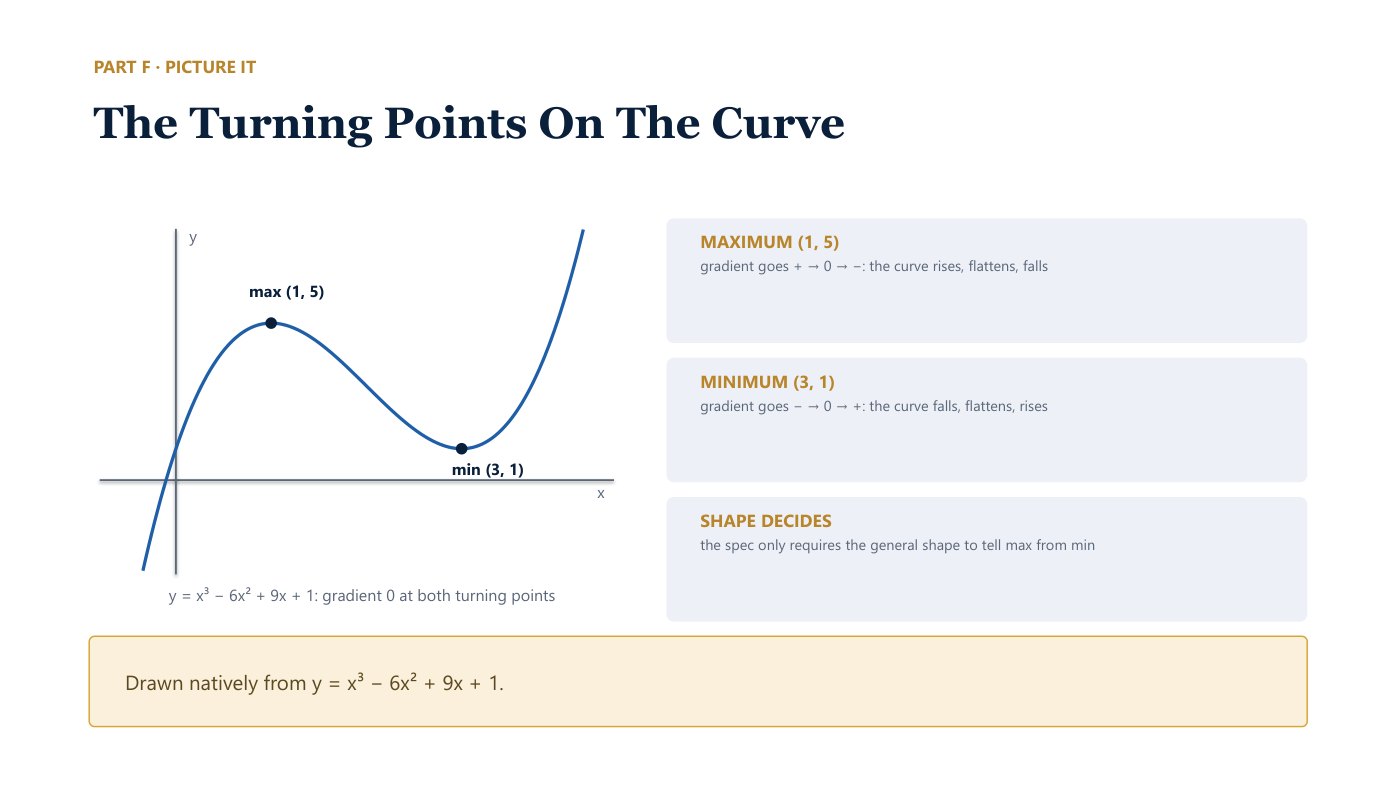
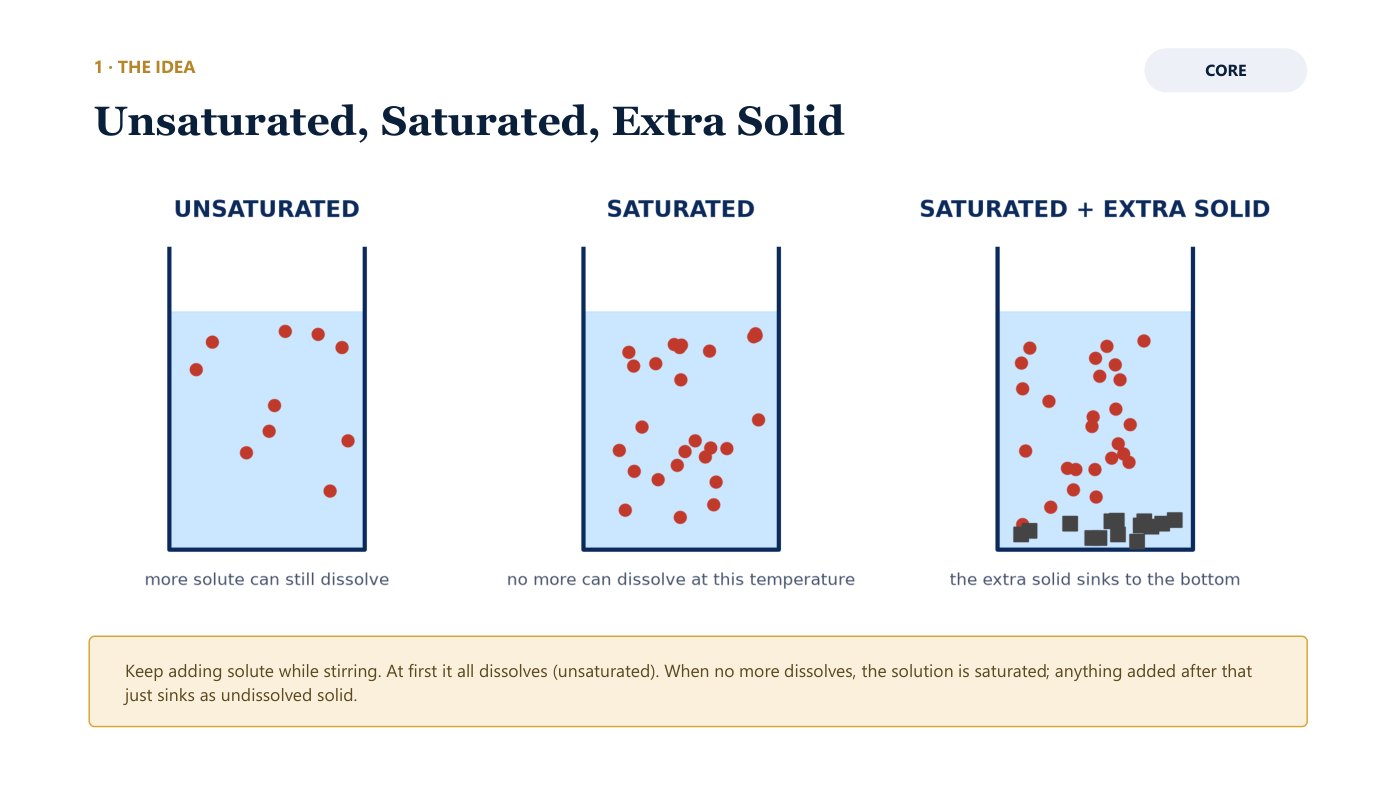
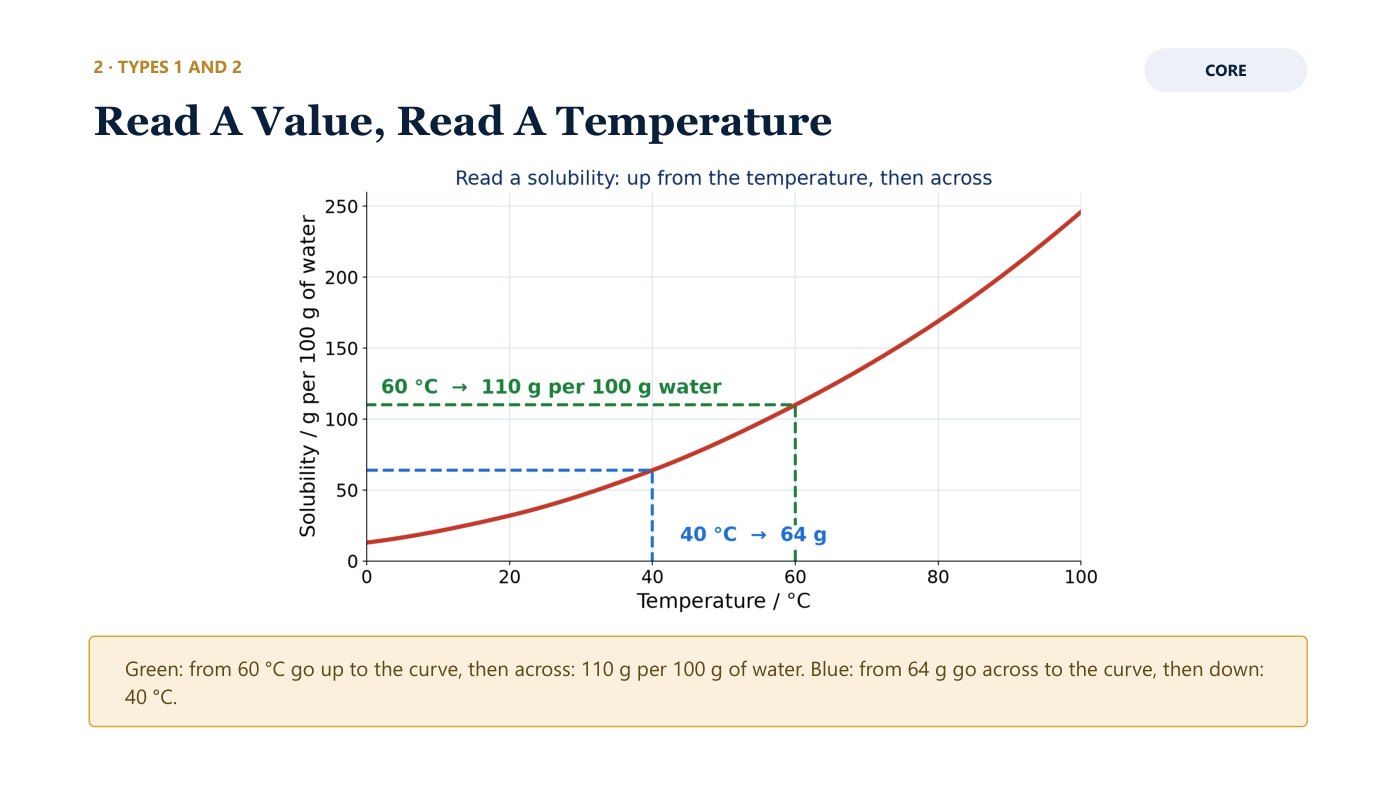
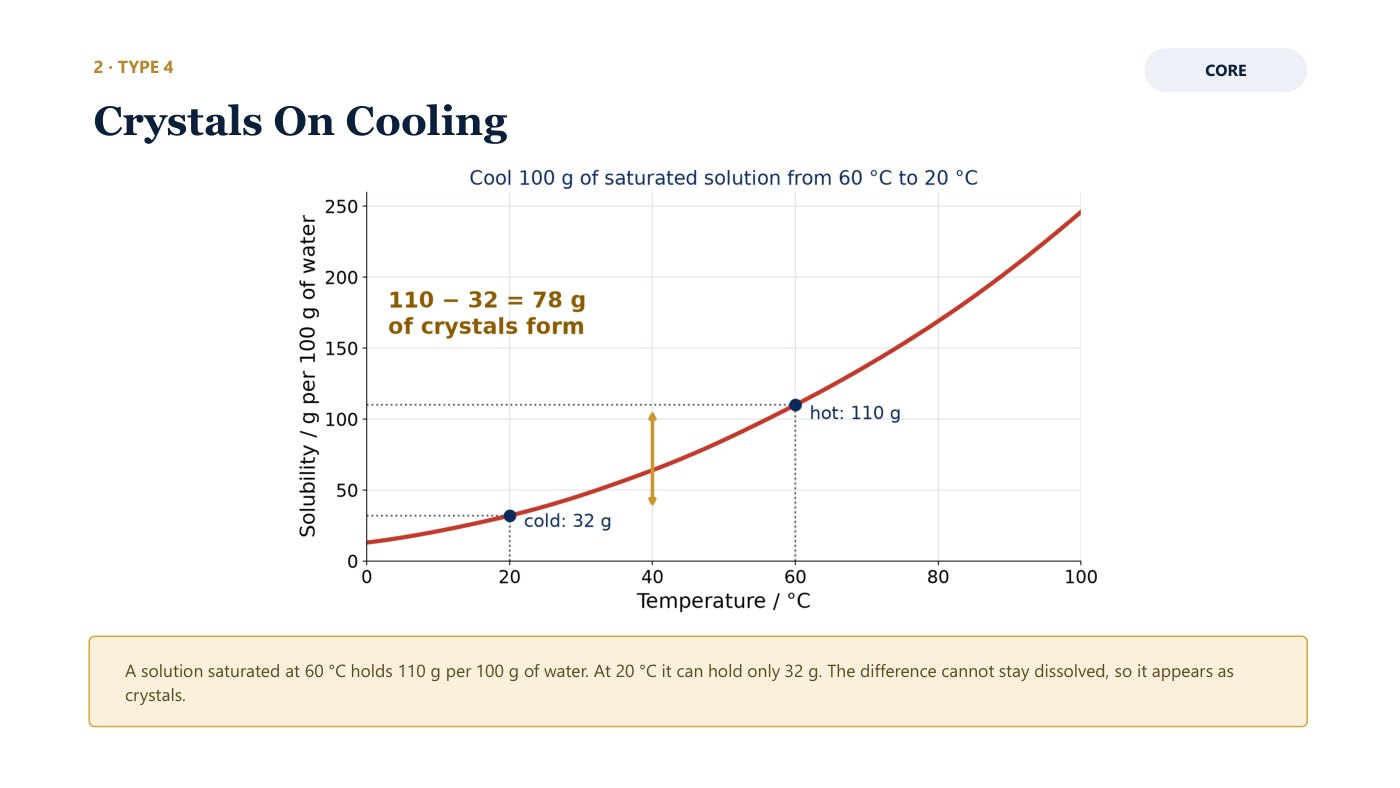
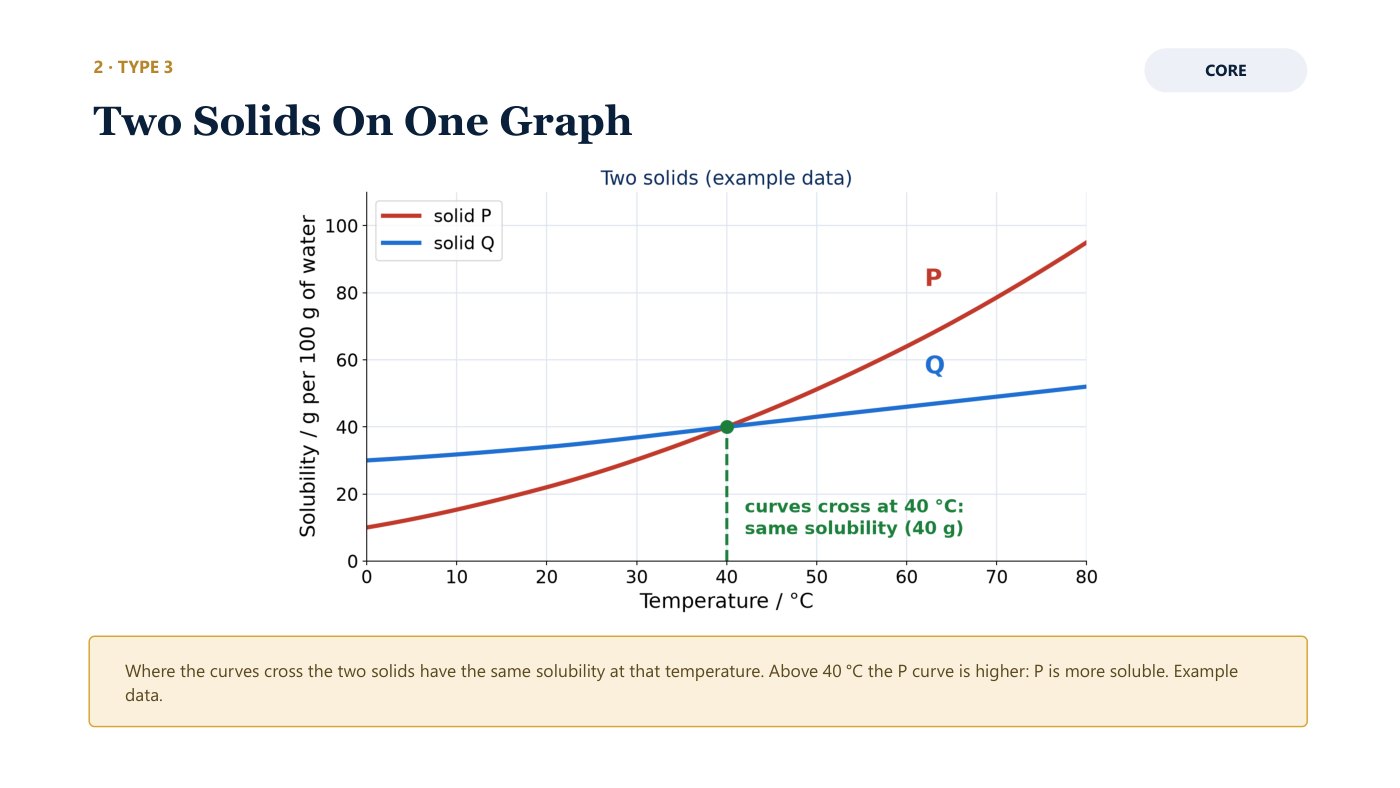
Every graph and diagram is drawn from its equation or data, not copied from a textbook, so the numbers on the slide are exactly the numbers in the working.
Real past-paper questions in every part
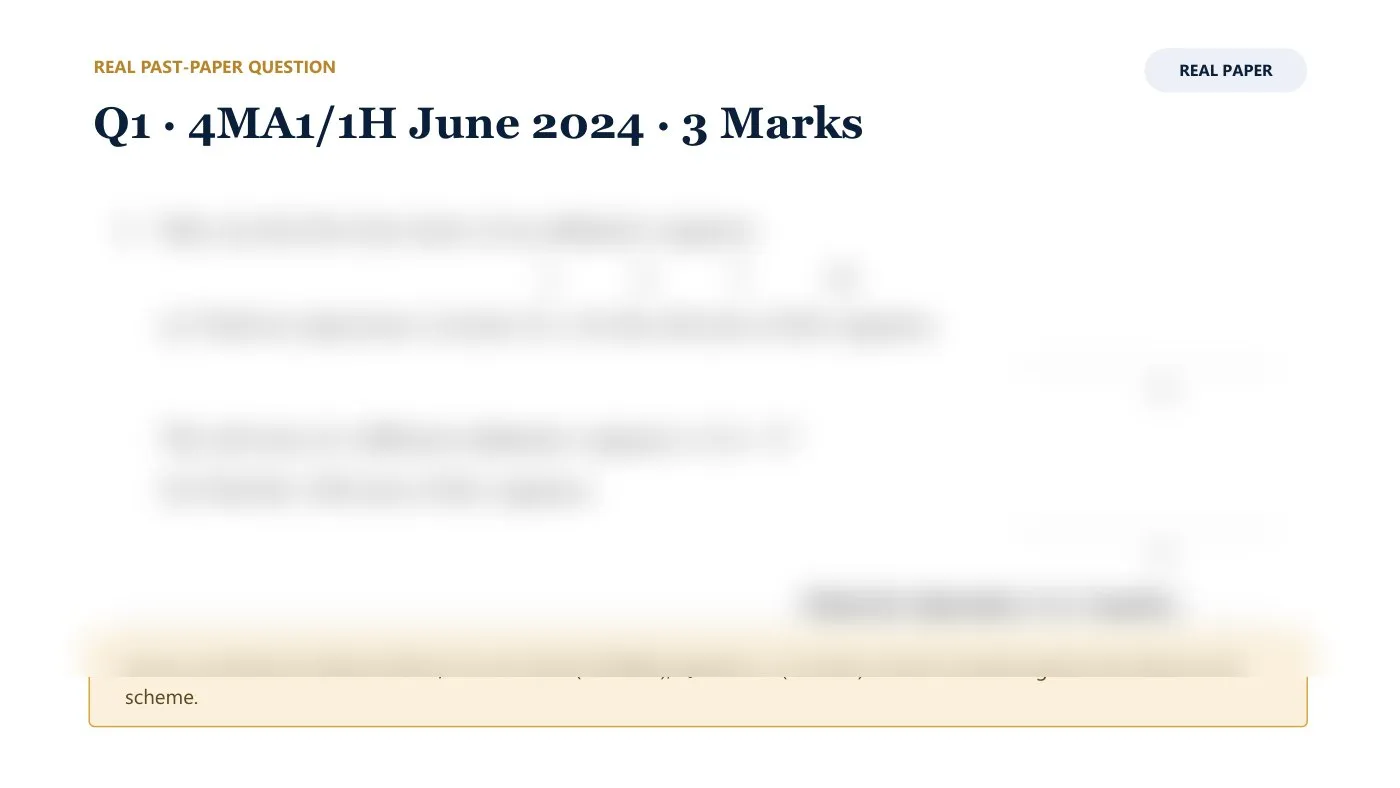
After the worked examples, each part of the deck has real questions from your child’s board, newest exam sessions first. Each one is solved on the next slide with the board’s official mark scheme, so your child learns what earns each mark.
The question is blurred here because exam questions belong to the exam boards. In class, your child sees it in full.
Every class has a plan, and an ending
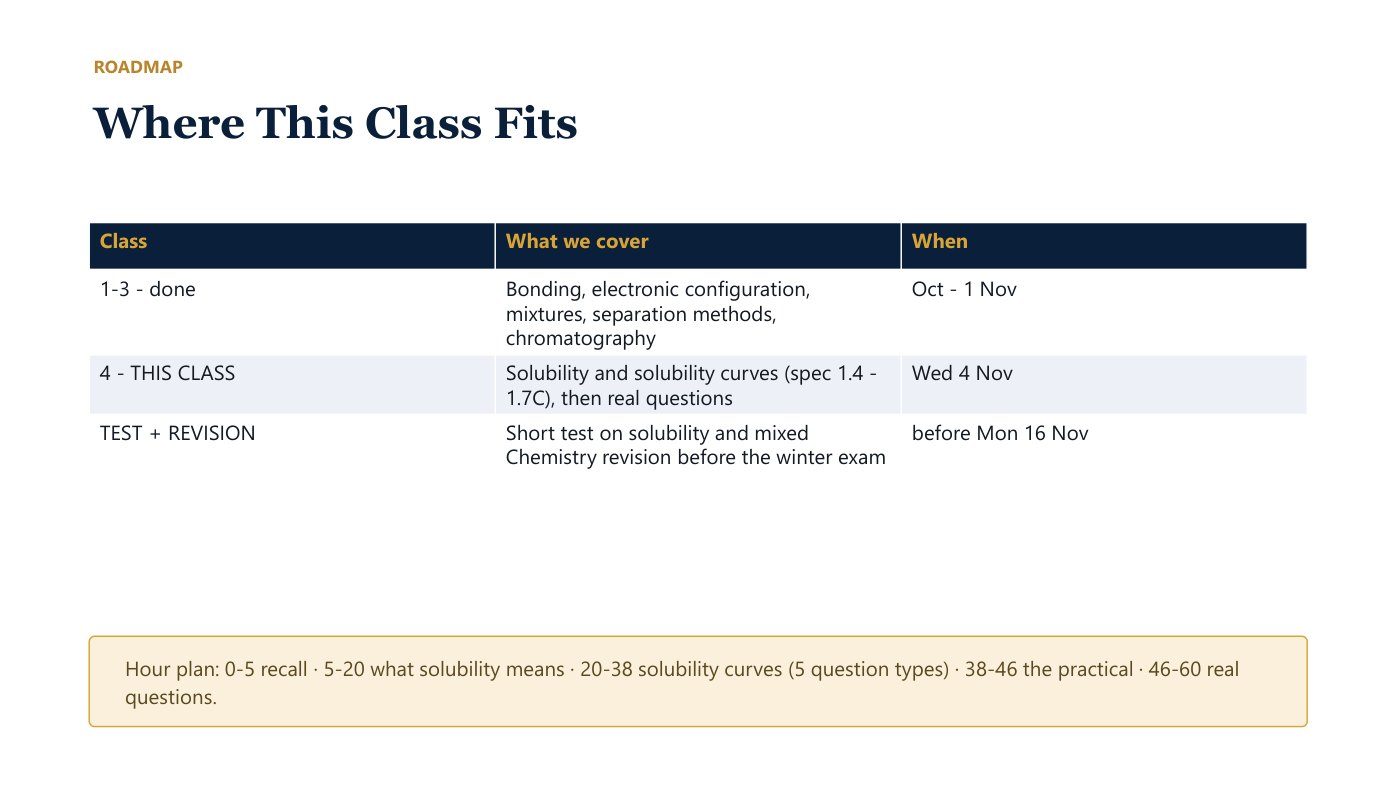
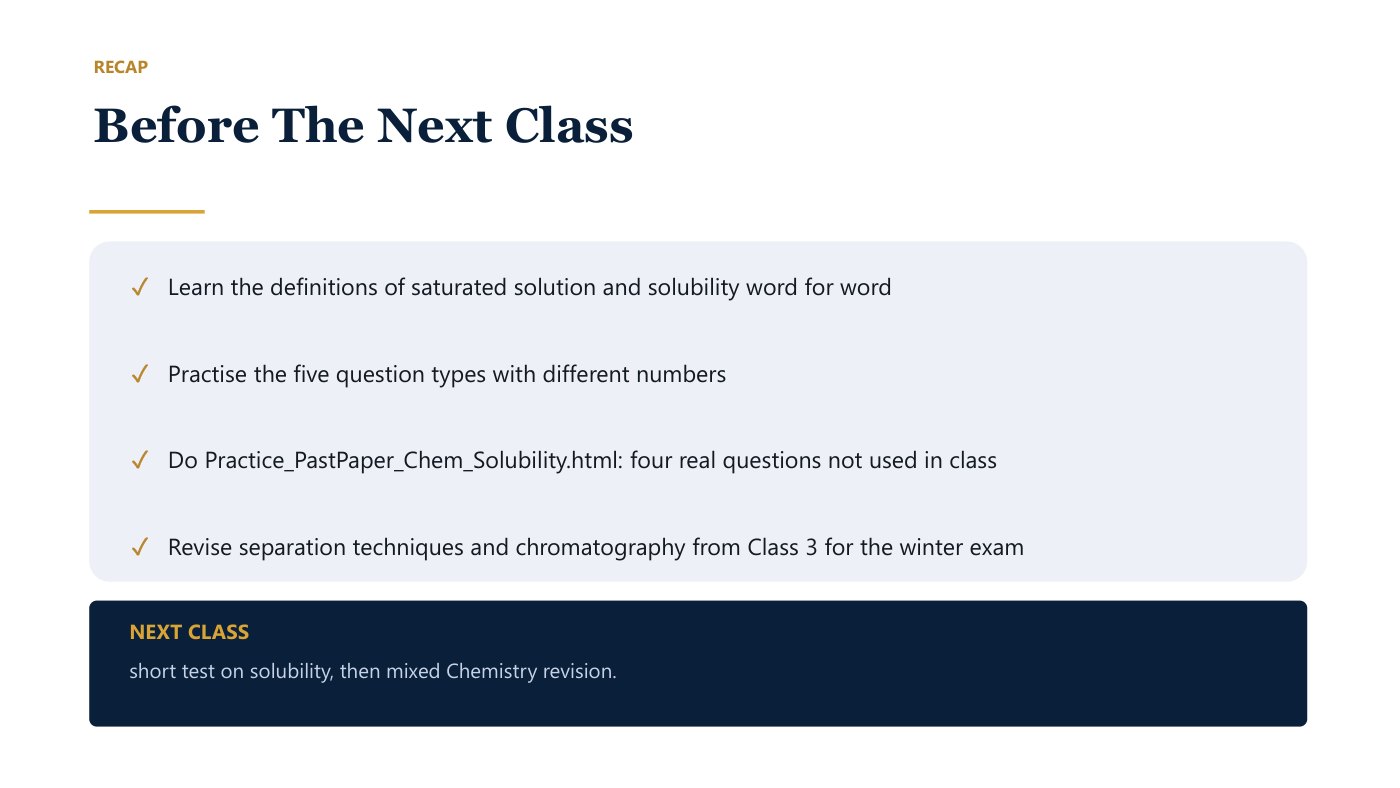
Classes open with where the topic fits and what today covers. They end with the mistakes that cost marks and a short list of what to do before the next class.
Homework between classes
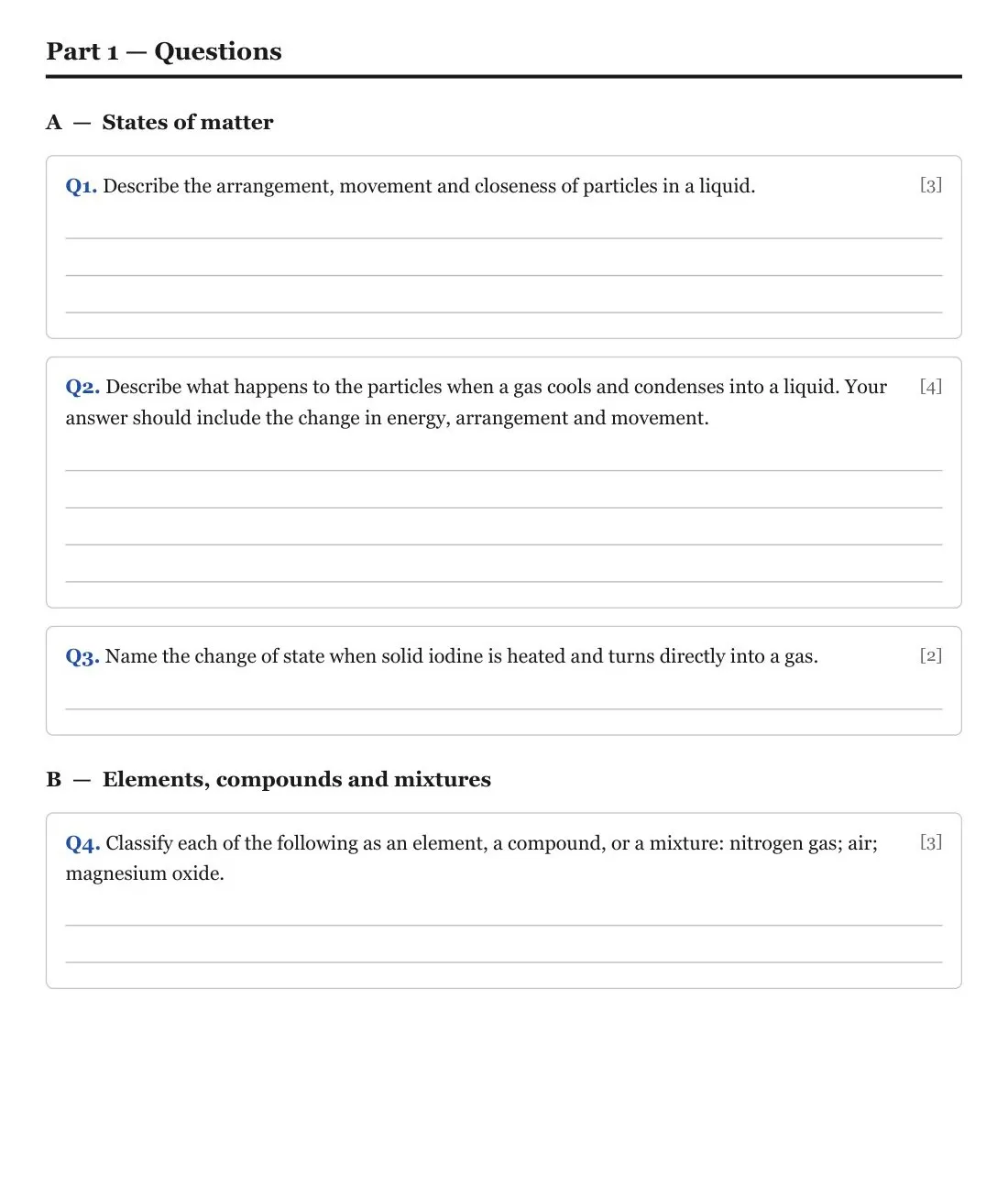
Homework is a printable sheet on the topic just taught, with marks shown for every question and space to write. The questions are our own, written to match the wording and difficulty of the real paper.
Your child sends photos of the finished work. We check it before the next class and start with anything that went wrong.
How we check the work
Tests are marked the way examiners mark: method marks for correct working, accuracy marks for correct answers.
-
Free 60-minute demo
A real lesson on a topic your child finds hard. You hear what we noticed and what we suggest.
-
A plan for the exam
We map the syllabus against the exam date and agree lessons per week and the order of topics.
-
Weekly one-to-one lessons
Live on Google Meet with slides prepared for that lesson, recorded key steps and practice in class.
-
Notes and homework
Your child keeps the lesson notes and gets homework on the same topic, checked before the next class.
-
Marked tests and reports
Short tests marked like the real exam, with a table of what went well and what to fix. Parents get the result.
See how your child is taught before you pay
Book a free 60-minute one-to-one lesson. You choose the topic; we show you the notes, the practice and how the work is marked.